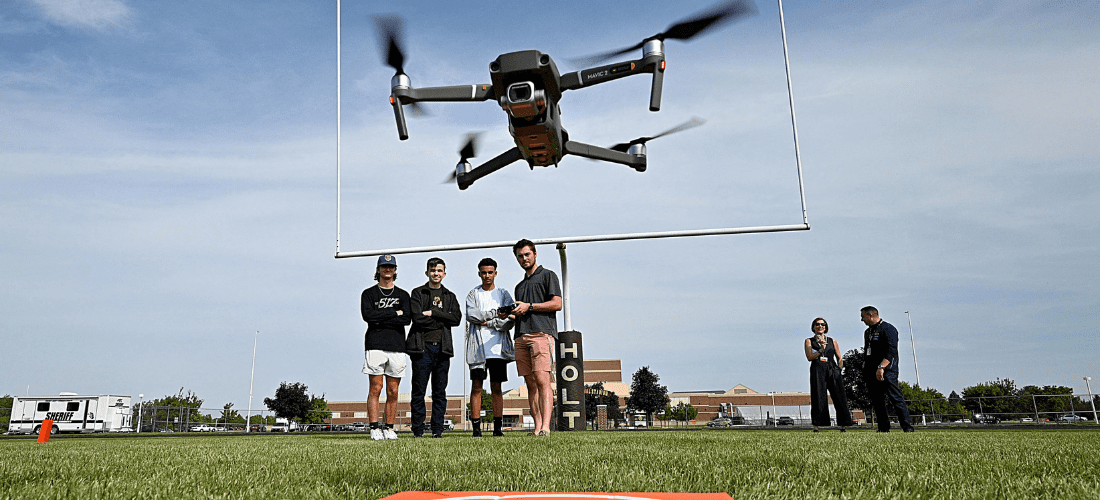
The global commercial drone market is projected to balloon to an estimated $1.2 trillion by 2030 (Source: Flying Magazine). This growth is creating a huge demand for certified operators, leading to a looming shortage of skilled drone pilots. This is the single biggest career opportunity for today’s students. The key to accessing this lucrative market is the FAA Part 107 Remote Pilot Certificate. That’s why we’ve partnered with DARTdrones, the nation’s leader in drone training, to provide students with the fastest, most effective path to certification and a professional career.
Why the Demand for Certified Pilots is Skyrocketing
The looming pilot shortage isn’t about recreational flying; it’s about the rapid integration of drones into high-value commercial sectors. Companies are embracing drones because they are safer, faster, and more efficient than traditional methods. The Part 107 license is the key to unlocking these high-paying fields:
- Construction and Infrastructure: Drones are used for site monitoring, land surveying, and creating real-time 3D models, replacing dangerous, time-consuming inspections and allowing for instant project visibility (Source: Commercial UAV News).
- Energy and Utilities: Inspecting massive assets like wind turbines, solar farms, and power lines is a critical and high-paying niche, providing a career path in essential services.
- Real Estate and Media: While real estate is a common starting point, the commercial license opens doors to professional video production, cinematic filming, and high-end marketing campaigns.
Being a certified drone pilot isn’t just about maneuvering an aircraft; it’s about being a data collection and analysis specialist who provides measurable value to a client.
The Student’s Fast Track: Earning the FAA Part 107 License
The door to this lucrative market is the FAA Part 107 Remote Pilot Certificate. This is the legal requirement for anyone flying a drone for profit or commercial business in the United States. Without it, your student is limited to hobby flights. The great news is that a student can start early—you must be at least 16 years old to take the Part 107 knowledge exam (Source: FAA – Become a Certificated Remote Pilot).
Partnering with DARTdrones: Your Path to Certification
Passing the FAA’s rigorous knowledge test is often the hardest step for aspiring commercial pilots. This is where our exciting partnership with DARTdrones, the nation’s leader in drone training, comes in. DARTdrones is renowned for its high pass rate (99.6%) and curriculum developed by expert pilots, including former military and manned aviation professionals.
To get certified, students simply follow these three steps with the confidence of DARTdrones’ training:
- Study for the Exam: Enroll in the DARTdrones Online Part 107 Test Prep Course (or an in-person session). Their focused curriculum cuts through the unnecessary jargon and gives students exactly what they need to know to pass the test the first time.
- Schedule the Test: Obtain an FAA Tracking Number (FTN) and schedule the Unmanned Aircraft General – Small (UAG) knowledge test at an FAA-approved testing center.
- Get Certified: Pass the exam and complete the final application through the FAA’s IACRA system to receive the official Part 107 license.
Part 107 = Paycheck: Launching a Drone Career
The certification immediately translates into earning potential, even for students juggling school or other commitments.
Building a Business with a Side-Hustle
The Part 107 license enables immediate freelance work, allowing students to build their portfolio and client base.
- Real-World Gigs: Entry-level opportunities include residential roof and property inspections (often found through work apps) and providing aerial photos/videos for local real estate agents (Source: Reddit – Got my part 107, looking to make side money).
- The Earnings Potential: Experienced pilots and those on specialized contracts can earn $950–$1,200 for a full day of work documenting construction sites or other industrial assets (Source: Reddit – How do you personally make money with drones?).
The Value of Specialization
While the Part 107 is the foundation, the highest-paying, most stable jobs require specialized skills. Students should leverage their Part 107 license and pursue additional training. DARTdrones also offers advanced courses in niches like Aerial Mapping and Modeling or Aerial Inspections, which allow pilots to command higher rates and land long-term contracts.
Ready to Take Off?
The demand is clear, the market is massive, and the path to becoming a professional pilot is laid out. Don’t let your student miss the chance to get on the ground floor of this career revolution. The FAA Part 107 license is the key, and our partnership with DARTdrones is the most effective way to secure it.
Your Next Step: Start your journey today by exploring the training options.